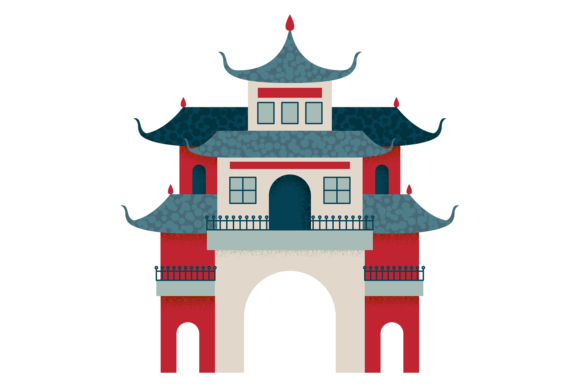
Japanese House Pagoda Color Icon: Asian Design Asset Guide
Understanding the Visual Language of the Pagoda Icon
The Japanese House. Pagoda Color Icon. Asian is more than just a simple graphic; it is a condensed visual narrative of architectural heritage. At its core, this design asset captures the silhouette of a pagoda—a tiered tower with multiple eaves—and renders it in a stylized, often colorful format suitable for digital use. The visual characteristics usually involve clean lines and a deliberate simplification of complex structural details. You will often see the distinct upward-curving rooflines, which are not just decorative but functional elements of traditional Japanese architecture designed to protect the base from rain. When isolated on a white background, typically provided in formats like EPS, JPG, SVG, and transparent PNG, the icon loses all environmental context, allowing it to stand purely as a symbol of stability, spirituality, and East Asian aesthetics.
The "personality" of this asset is serene yet authoritative. It carries the weight of history without feeling dusty or outdated. The style leans heavily into modern vector aesthetics, which means it scales beautifully from a tiny mobile screen icon to a large-format print. This versatility is crucial for contemporary creators. The appeal lies in its ability to convey a specific cultural reference instantly. Whether the icon uses a traditional red and gold palette or a more muted, modern color scheme, it evokes a sense of craftsmanship. For a designer, this asset acts as a bridge between traditional Asian art forms and modern minimalism, making it a powerful tool for projects that require an authentic yet clean look.
Strategic Applications for Marketers and Creators
Knowing what an icon looks like is one thing; knowing where to deploy it effectively is where the real value lies. The Japanese House. Pagoda Color Icon. Asian is a versatile component in a designer’s toolkit, suitable for a wide range of commercial and personal projects. In brand identity, this icon can serve as the cornerstone for businesses in the wellness, travel, or culinary sectors. Imagine a sushi restaurant’s loyalty card or a yoga studio’s app interface; the pagoda icon reinforces the brand's promise of authenticity and tranquility. It is equally effective in packaging design, where shelf appeal is paramount. A small, well-placed icon on a tea box or a skincare product can elevate the perceived value of the item, suggesting premium ingredients and careful sourcing.
In the digital realm, the utility of this asset is extensive. For web design, it works exceptionally well as a favicon, a section divider, or a loading animation element. Because it is available in transparent PNG and SVG formats, it integrates seamlessly into various color schemes and responsive layouts. Social media graphics also benefit from this type of imagery. Content creators focusing on travel blogging, cultural commentary, or lifestyle content can use the icon to create consistent visual motifs across their Instagram stories or Pinterest boards. It helps in creating a cohesive design asset library that streamlines the content creation process. Furthermore, for editorial design, such as magazine layouts or e-book covers featuring Asian themes, the icon can act as a thematic anchor, tying disparate visual elements together under a unified aesthetic.
Integrating the Icon into Visual Hierarchy and Typography
An icon does not exist in a vacuum; it interacts with text, whitespace, and other graphic elements. When incorporating the Japanese House. Pagoda Color Icon. Asian into a layout, understanding visual hierarchy is essential. This icon usually commands attention due to its distinct shape and color. Therefore, it should be placed where it can guide the viewer's eye without overwhelming the message. For instance, in logo design, the icon might sit adjacent to a wordmark. Here, the relationship between the icon and the typeface is critical. A heavy, blocky serif font might fight with the intricate details of the pagoda, whereas a clean sans serif font often provides a complementary contrast, allowing the icon's silhouette to breathe.
Consider the font pairing strategy. If the project leans towards a modern, sleek aesthetic, pairing the icon with a modern typography style—such as a geometric sans serif—can create a fresh look that respects tradition while looking forward. Conversely, if the project aims for a more authentic, artisanal feel, a script font or a handwritten font might be appropriate, provided it doesn't become illegible at smaller sizes. Readability remains the priority. The icon should enhance the content, not distract from it. In commercial font usage scenarios, such as merchandise or corporate stationery, ensuring that the icon's colors harmonize with the typography is vital for maintaining professionalism and consistency.
Practical Evaluation and Implementation Tips
Before finalizing the use of the Japanese House. Pagoda Color Icon. Asian in your next project, a practical evaluation is necessary. First, assess the project fit. Does the icon’s specific style match the narrative you are building? A highly stylized, cartoonish pagoda might suit a children’s educational app but would likely undermine the credibility of a high-end architectural firm. Review the included file formats. The availability of an SVG is particularly valuable for web design because it ensures the icon remains crisp on high-resolution retina displays, whereas the EPS format is indispensable for print production.
When testing the icon, place it in context with your actual copy. Does it align with the display font used for headlines? Does it clash with the background texture? Pay attention to the negative space around the icon; crowding it against text can make the design feel cluttered and reduce engagement. For entrepreneurs and small business owners, this icon is a premium font alternative in the sense that it provides high-level design quality without requiring a custom commission from an illustrator. It is a ready-made solution that, when used thoughtfully, contributes significantly to brand perception. By treating this asset not just as a picture but as a functional element of your communication strategy, you ensure that your final output is polished, culturally aware, and visually compelling.